The Red River Rebellion, also known as the Red River Resistance, stands as one of the most defining moments in the early history of Winnipeg and Manitoba. It was not simply a rebellion in the traditional sense, but a political and cultural movement led by the Métis people to protect their land, rights, and way of life during a time of rapid change in what would soon become part of Canada.
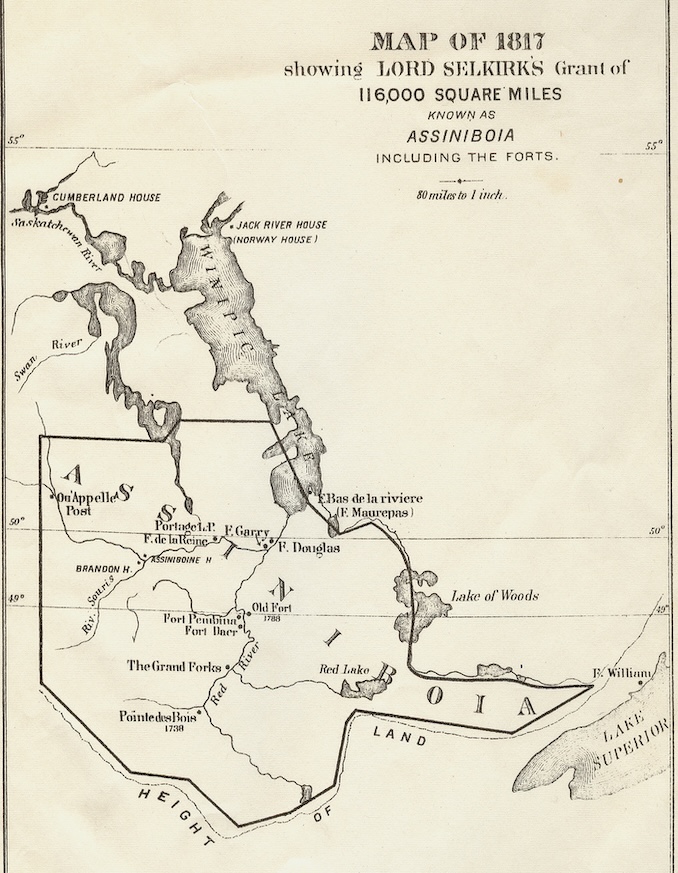
At its core, the Red River Rebellion was about identity, governance, and control. It took place in the Red River Settlement (Assiniboia), a community made up largely of Métis people, along with First Nations, French speaking settlers, and English speaking inhabitants. The events of 1869 and 1870 would ultimately lead to the creation of Manitoba as a province, forever shaping the region’s future.
Red River Rebellion Origins and Rising Tensions
In the late 1860s, the vast territory known as Rupert’s Land was controlled by the Hudson’s Bay Company. This land included the Red River Settlement. In 1869, the company agreed to transfer this territory to the newly formed Canada without consulting the people who already lived there.
This decision created immediate tension. The Métis, who had developed a distinct culture rooted in both Indigenous and European traditions, feared that their land rights and political voice would be ignored by the incoming Canadian government. Surveyors sent to divide the land into square plots according to the Canadian system only deepened these concerns, as it disrupted the traditional river lot system used by the Métis.
Into this moment stepped Louis Riel, a young and educated Métis leader who would become the central figure of the resistance. Riel recognized that without organized action, the Métis risked losing both their land and their cultural autonomy.
Red River Resistance and the Formation of a Provisional Government
In October 1869, Métis forces led by Riel halted the progress of Canadian surveyors and asserted control over the Red River Settlement. One of their key actions was the occupation of Upper Fort Garry, a strategic location that served as the administrative centre of the region.
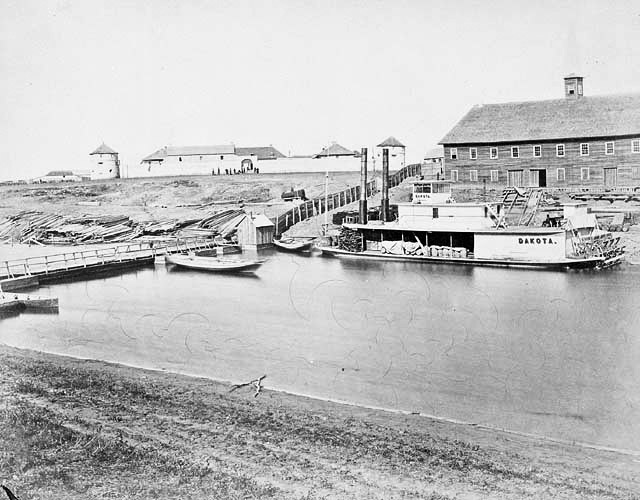
Riel and his supporters established a provisional government to negotiate with Canada on equal terms. This was a crucial step, as it transformed the movement from a local protest into a political entity with defined leadership and goals. The provisional government created a list of rights that outlined the protections the Métis and other residents wanted guaranteed before joining Confederation.
![Councillors of the Provisional Government of the Métis Nation. Front row, L-R: Robert O'Lone, Paul Proulx. Centre row, L-R: Pierre Poitras, John Bruce, Louis Riel, John O'Donoghue, François Dauphinais. Back row, L-R: Bonnet Tromage, Pierre de Lorme, Thomas Bunn, Xavier Page, Baptiste Beauchemin, Baptiste Tournond, Joseph (Thomas?) Spence[1] This image is frequently listed with the caption that the persons in the photograph are councillors of the Provisional Government of the Métis Nation, however, there are several persons in the image who were not councillors in the Legislative Assembly, but did hold offices at different levels of the provisional government.](https://winnipegguardian.com/wp-content/uploads/2026/04/ProvisionalMetisGovernment.jpg)
Red River Rebellion Conflict and the Execution of Thomas Scott
Tensions escalated as opposition to the provisional government emerged, particularly among some English speaking settlers who opposed Riel’s leadership. This conflict came to a head with the arrest and execution of Thomas Scott, a member of a group that resisted the provisional government.
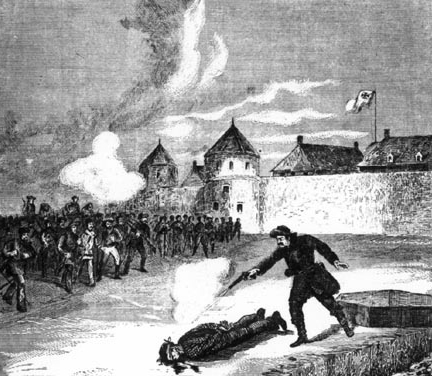
Scott’s execution in March 1870 became one of the most controversial moments of the Red River Rebellion. While the provisional government viewed it as a necessary assertion of authority, it was widely condemned in Ontario and other parts of Canada. The event intensified divisions and placed Riel at the centre of a national controversy that would follow him for the rest of his life.
Red River Resistance and the Creation of Manitoba
Despite the tensions and conflict, negotiations between the provisional government and Canada continued. These discussions led to the passing of the Manitoba Act, which officially created the province of Manitoba.
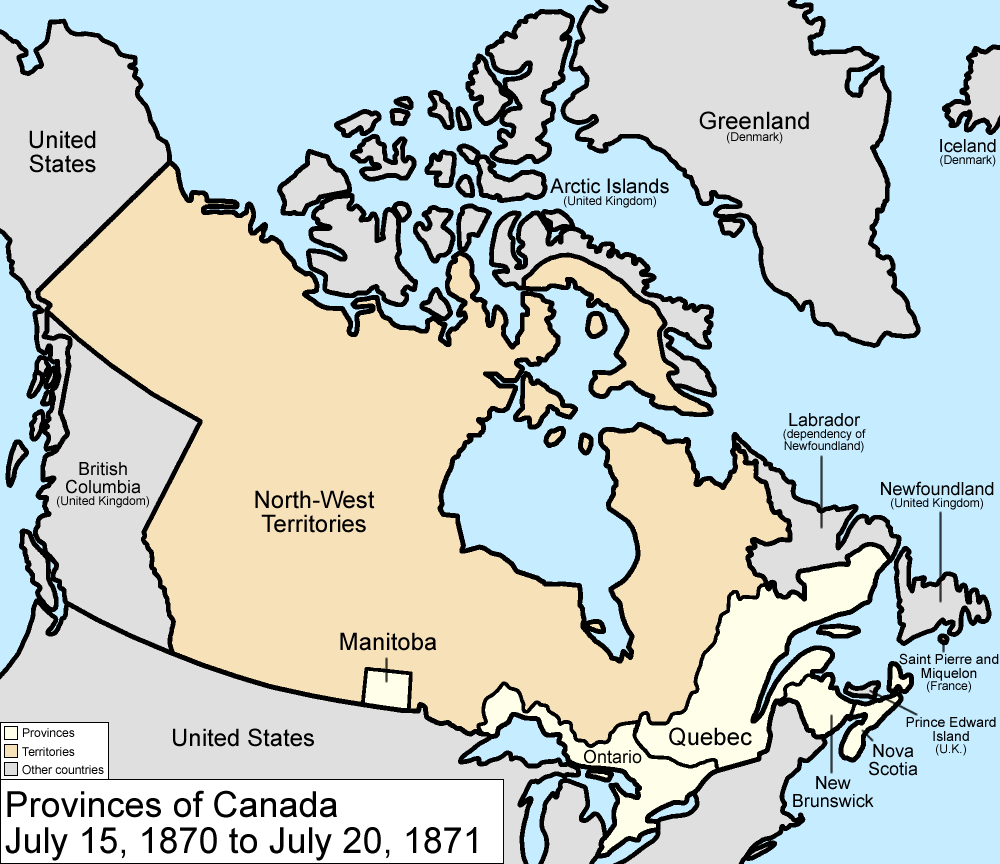
The Manitoba Act included several key provisions that reflected the demands of the Métis. It recognized land rights, provided for bilingual institutions, and acknowledged the cultural and political presence of the Métis in the new province.
This outcome marked a significant achievement for the Red River Resistance. Rather than being simply suppressed, the movement succeeded in shaping the terms under which Manitoba entered Confederation.
Red River Rebellion Aftermath and the Red River Expedition
Following the creation of Manitoba, the Canadian government sent a military force known as the Red River Expedition to assert federal authority in the region.
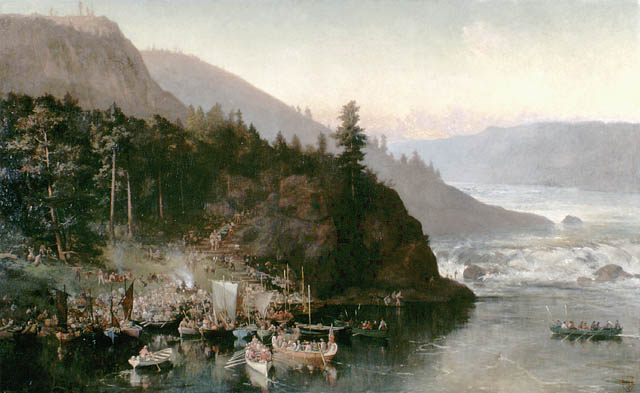
Although the expedition was officially described as peaceful, its arrival created fear among the Métis population. Many supporters of the provisional government, including Louis Riel, fled the area to avoid potential retaliation.
The aftermath of the rebellion was complex. While Manitoba had been created and certain rights had been recognized, many Métis people faced ongoing challenges, including displacement and the erosion of the protections they had fought for.
Red River Resistance Legacy in Winnipeg and Canada
Today, the Red River Rebellion is remembered as a foundational moment in Canadian history and a defining chapter in the story of Winnipeg. It highlights the role of the Métis as a distinct people and underscores the importance of negotiation, resistance, and political action in shaping the country.
The legacy of Louis Riel has also evolved over time. Once viewed by some as a controversial figure, he is now widely recognized as a नेता and a founder of Manitoba, with his contributions acknowledged across Canada.
For Winnipeg, the Red River Resistance is more than a historical event. It is part of the city’s identity, reflected in its culture, institutions, and ongoing conversations about rights, reconciliation, and heritage.
The story of the Red River Rebellion continues to resonate because it speaks to themes that remain relevant today: who has a voice, how communities protect their identity, and how history shapes the present.
Check out more Winnipeg Guardian history posts.