Winnipeg, a city rich in history, has been home to several iconic hotels, many of which have been demolished or repurposed. Each of these establishments told a unique story, reflecting the architectural and social environment of their respective eras. Here, we explore the history of five notable Winnipeg hotels: Merchants Hotel, Clarendon Hotel, Royal Alexandra Hotel, Empire Hotel, and Fort Garry Hotel.
We are excited to start our regular series of posts that aim to preserve Winnipeg’s heritage through photographs. In this, our first history post, we present a gallery of images capturing the past and present of these historic hotels. We believe that through these photographs, you can experience the past as it once was and hear about the stories that these buildings have to tell.
Merchants Hotel
The Merchants Hotel, located on Selkirk Avenue, started its journey in 1913. This establishment quickly became a staple in Winnipeg’s North End, serving as a popular meeting spot for merchants and travellers due to its strategic location. The hotel was initially situated within the Steiman Block, built by William Steiman in 1912. Steiman was a prominent local figure who managed to shape the commercial landscape of the area.
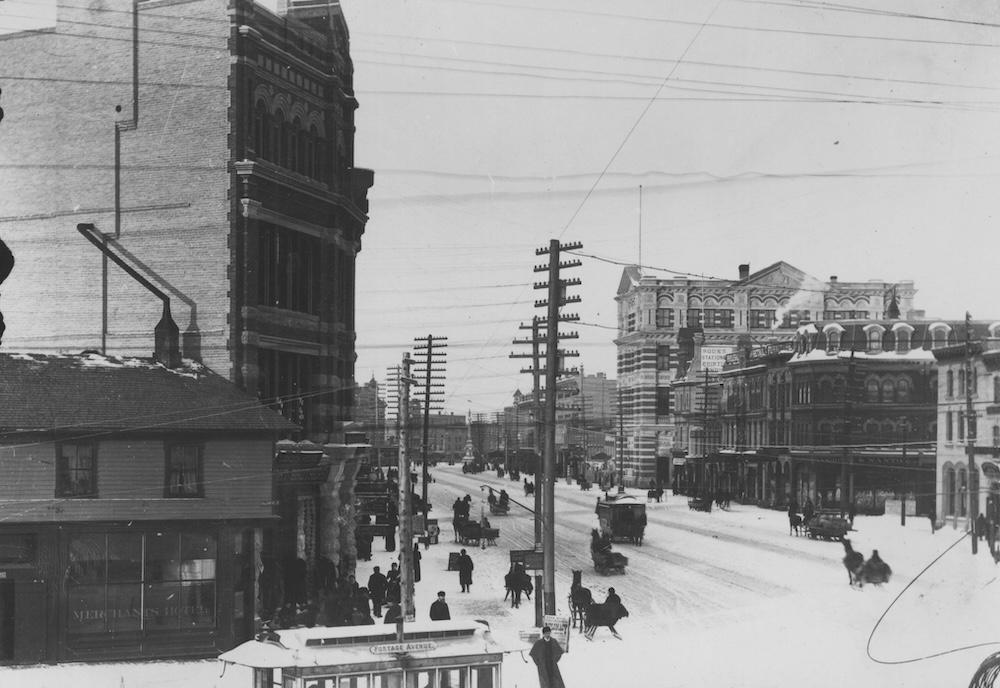
In 1933, Steiman converted the building into what we now recognize as the Merchants Hotel. Over the decades, the hotel catered to the working-class population and became a cornerstone of the community. However, as time passed, the building experienced a period of decline. By the late 20th and early 21st centuries, it was known more for its deteriorating condition than for its historical significance.
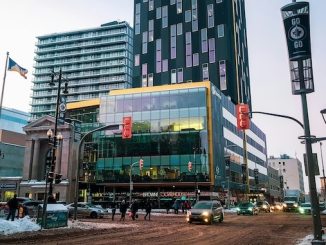
In 2012, significant efforts began to transform and revitalize the building. The project aimed not just at restoring its architectural essence but also at repurposing it to serve contemporary community needs. Restoration efforts culminated in the development of “Merchants Corner,” a mixed-use facility that includes educational and community spaces. Since reopening, the complex has been celebrated as a model of how historic preservation can meet modern social needs.
Photos from various archives, including the University of Manitoba Archives & Special Collections and the Archives of Manitoba, document this transformation. These images capture the building’s state in the 1960s, its significant renovations in 2017, and its current incarnation as Merchants Corner.
Clarendon Hotel
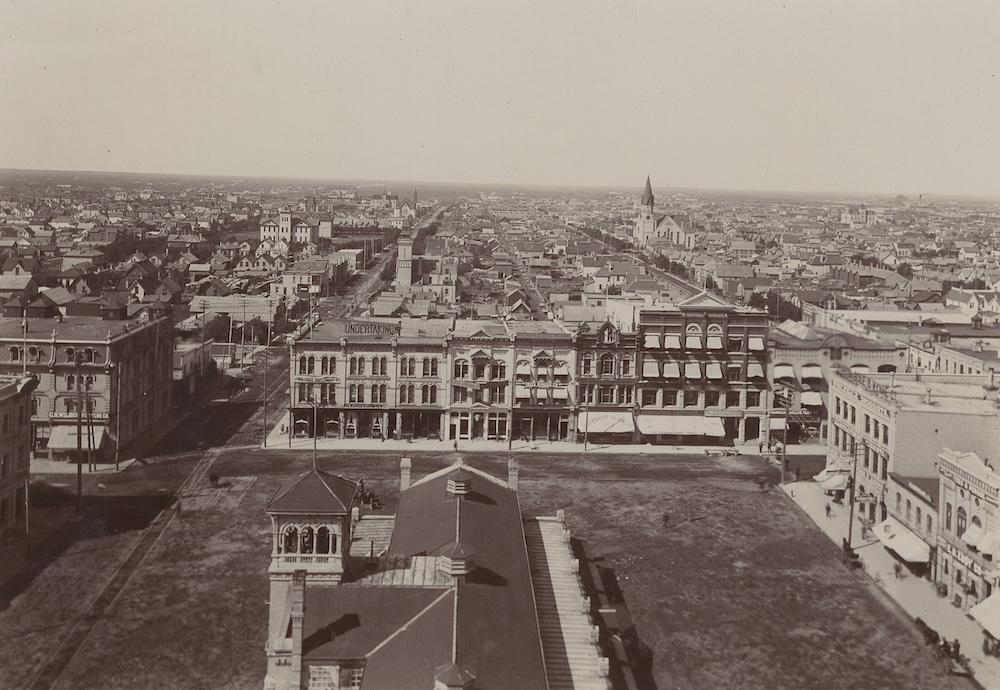
The Clarendon Hotel was a historic building at the northwest corner of Portage Avenue and Donald Street in Winnipeg. Designed by architect James Chisholm and completed in 1883, it was initially a five-storey structure that quickly became a prominent city landmark. In 1920, the building was replaced with a new two-storey design by Chisholm and his associate, Colin Campbell “Cam” Chisholm.
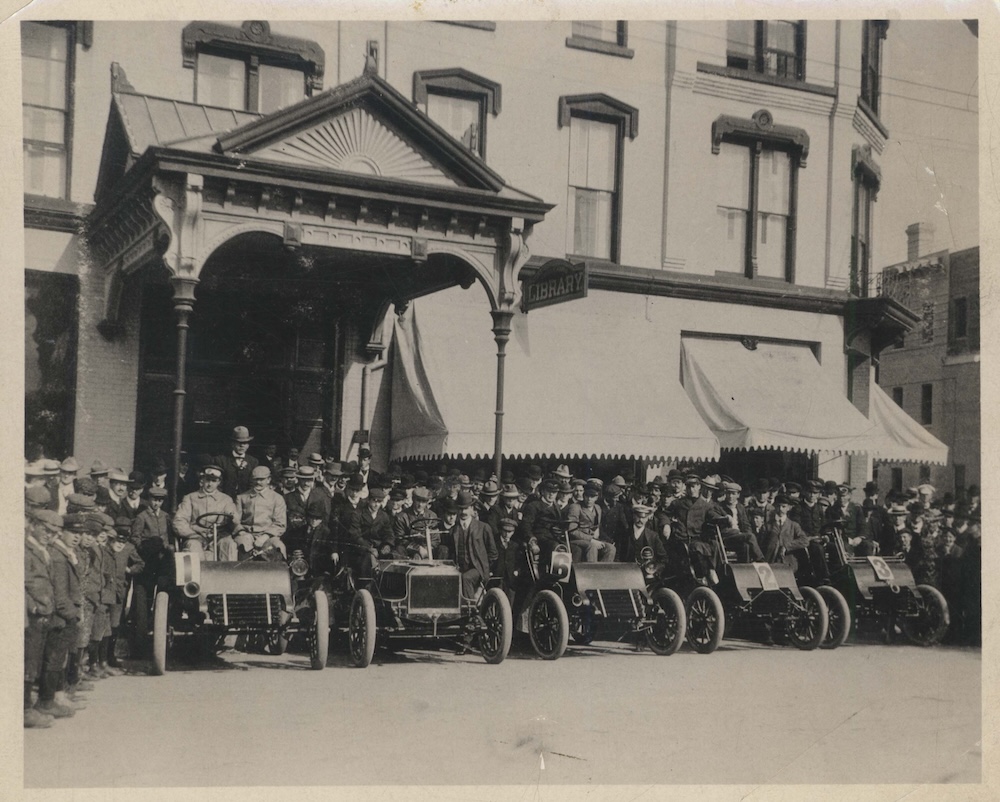
In February 1923, a fire caused significant damage, prompting repairs that cost around $80,000. During these repairs, notable interior redesigns were executed by W. A. Irish and Company. Additional renovations occurred in 1930 and 1935 to update the storefronts.
From 1932 to 1949, the Dangerfield Hotel Company managed the Clarendon. The hotel closed in the summer of 1998, after which it served various purposes until being vacated. In mid-2011, the City of Winnipeg approved the demolition of the Clarendon and the nearby Mitchell-Copp Building, which began in March 2012. By fall 2015, a new hotel, office complex, and parkade were completed on its site.
The Manitoba Historical Society preserves the legacy of the Clarendon Hotel, highlighting its significance in Winnipeg’s architectural and social history.
Royal Alexandra Hotel
The Royal Alexandra Hotel, located at the northeast corner of Higgins Avenue and Main Street in Winnipeg, was designed for the Canadian Pacific Railway by Montreal architects Edward and William Maxwell. Built by contractor Alexander A. Woodward, the hotel opened in 1906 and was known as one of the finest hotels in western Canada, serving as a prominent social centre in Winnipeg.
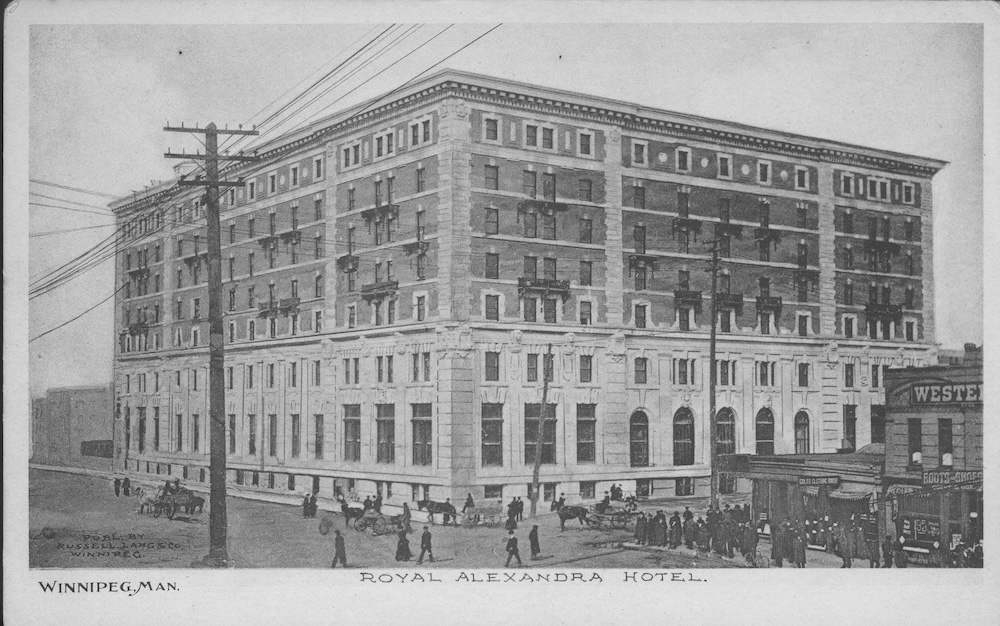
The hotel hosted various significant events, including meetings of the Canadian Club of Winnipeg. A plaque listing Club members who were killed during the First World War was displayed there and is now stored at the Archives of Manitoba.
The Royal Alexandra Hotel closed its doors in 1967 and was demolished in 1971. The dining room interior was carefully disassembled and reassembled at the Cranbrook History Centre in Cranbrook, British Columbia. Some Tyndall stone lion heads from the facade were donated to the City of Winnipeg by Alexander Billinkoff of Atlas Wrecking and are displayed near the original hotel site.
Empire Hotel
The Cauchon Block, which later became known as the Empire Hotel, was originally connected to Lieutenant-Governor Joseph E. Cauchon. In late 1880, Cauchon purchased lots at the southeast corner of Main Street and York Avenue from the Hudson’s Bay Company, intending to develop them. By April 1881, architect L. A. Desy had completed plans for a significant building featuring a Greek architectural style, extending 150 feet along Main Street.
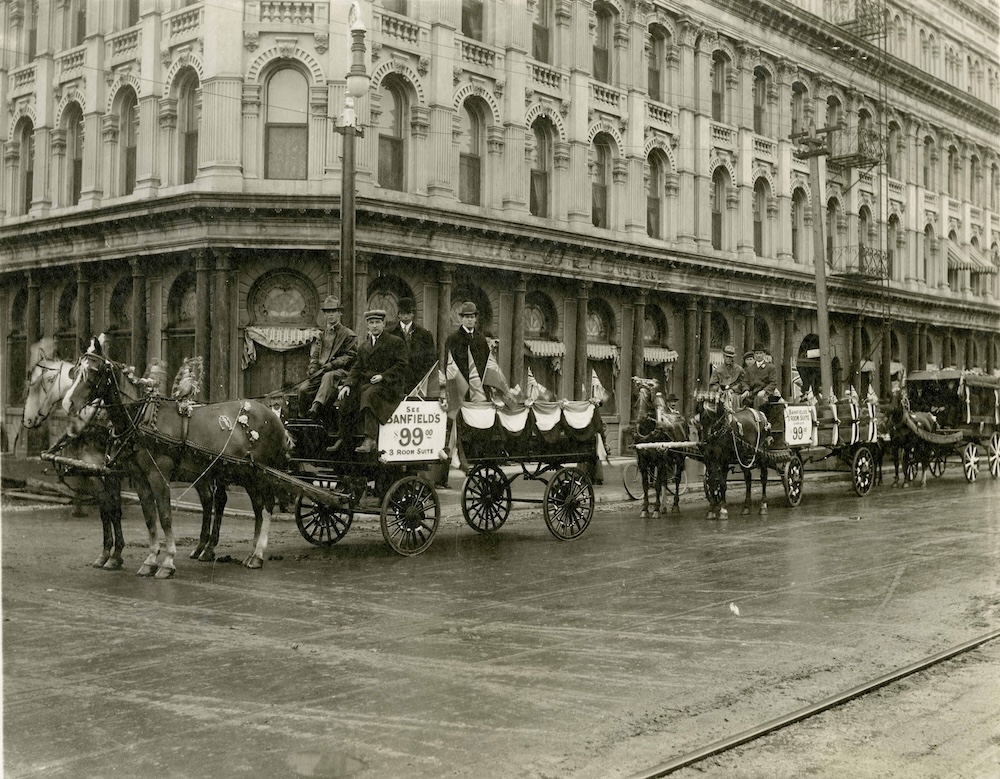
Construction of the Cauchon Block began in 1881, with the basement completed by April 1882. Key contractors included John Ennis, Bronnet and Cassan for brickwork, and Vulcan Iron Works for cast-iron fittings, along with Linklater and Deslauriers for galvanized iron ornamentations. The building was constructed using locally sourced materials and labor, marking an early example of Winnipeg’s industrial capabilities.
Completed in February 1883, the four-story structure comprised eight stores and thirty-five offices. However, despite Cauchon’s anticipations of high rental income, the building faced significant difficulties in being fully occupied due to the economic downturn following the land boom. Although initially a gamble that did not pay off for Cauchon, the building eventually succeeded after the arrival of the Canadian Northern Railway in the early 20th century.
The Cauchon Block’s later history as the Empire Hotel remains significant in Winnipeg’s urban development, representing a transition from early speculative investment to a functional part of the city’s infrastructure.
Fort Garry Hotel
The Fort Garry Hotel in Winnipeg, Manitoba, opened on December 11, 1913, and stands as a testament to early 20th-century vision and ambition. It was conceived during the era of the Grand Trunk Pacific Railway’s expansion, with Charles Melville Hays playing a pivotal role in its development. Designed by Ross and MacFarlane, the hotel’s architecture was inspired by French chateaux, featuring grand designs similar to prominent hotels in New York and Washington, D.C.
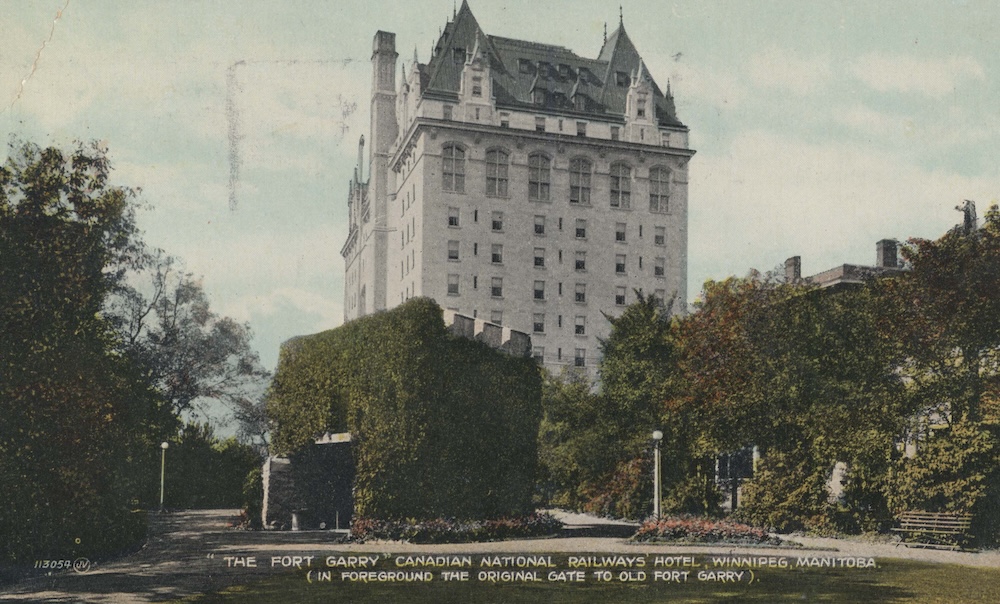
The hotel’s construction began in 1911, though it faced challenges like naming disputes and construction accidents. Despite these, it remained on schedule, impressing the public with its luxurious interiors, custom-designed by Laura Bergman, and lighting by Tiffany Studios. With public spaces characterized by Louis XIV style, the hotel quickly became a social hub in Winnipeg.
Over the decades, the Fort Garry Hotel has undergone renovations and management changes, including a period in the late 1980s when it was managed by Raymond Malenfant. In 2009, it was rebranded to include a spa and conference centre. Today, it continues to be a significant cultural and historical landmark, managed by Richard Bel, Ida Albo, and the Laberge Group of Quebec City, while maintaining its legacy of elegance and grandeur.
We hope you enjoyed viewing the visual history of Winnipeg’s hotels, and we hope you stay tuned for more history posts as we continue to explore and celebrate the city’s storied past.
If you want to browse more awesome photos from the Winnipeg archives, check out their website here.
![Councillors of the Provisional Government of the Métis Nation. Front row, L-R: Robert O'Lone, Paul Proulx. Centre row, L-R: Pierre Poitras, John Bruce, Louis Riel, John O'Donoghue, François Dauphinais. Back row, L-R: Bonnet Tromage, Pierre de Lorme, Thomas Bunn, Xavier Page, Baptiste Beauchemin, Baptiste Tournond, Joseph (Thomas?) Spence[1] This image is frequently listed with the caption that the persons in the photograph are councillors of the Provisional Government of the Métis Nation, however, there are several persons in the image who were not councillors in the Legislative Assembly, but did hold offices at different levels of the provisional government.](https://winnipegguardian.com/wp-content/uploads/2026/04/ProvisionalMetisGovernment-326x245.jpg)